Showing posts with label market. Show all posts

November 28, 2017

Catalan Olives and Where to Buy Best Olive Oil in Barcelona

Catalan-Pickled-Olives

Olives and the oil extracted from them are the very essence of Mediterranean countries. They permeate our traditions, our idiosyncrasy and our very existence, since they give us health too. Wild olives were collected by Neolithic peoples as early as the 8th millennium BC. Its trees were grown even before language came to life. Shrub-like "feral" olives still exist in the Middle East and represent the original stock from which all other olives are descended. 

Oil was used to anoint athletes after winning or was applied to the dead. Olive oil purifies and soothes the soul, cleanses the mind. Does that mean that if you use the extra virgin kind, would you be cleaner?. I digress. By the way, virgin or extra virgin, means that you do not use chemicals to produce it, that you get the oil just by pressing the olives. 

Catalan-Pickled-Black-Olives


In Catalonia, there are many varieties of olives that are cultivated across the region. Among them you have the picual (very common and responsible for 25 % of all oil in the world), the empeltre (black) , the arbequina (smaller, very tasty and one of my favorites). Also cornicabra, blanqueta, farga, manzanilla fina and sevillana just to mention some. 

Before buying olive oil you should know that some of them really make the difference. There is good Andalusian oil, and there is good Catalan oil, and so on. I have bought myself extremely good olive oil in Priego, Cordoba for example and have found good rivals many times in oils produced in Lleida, Catalonia. 

Here is a good article on where to buy excellent olive oil in Barcelona  

At the local markets you can find gourmet stands specialized in Catalan olive oil like this one at Mercat de la Concepció from Les Garrigues, Lleida   where you can buy excellent Arbequina extra virgin olive oil 

But where to buy the olives? I recommend you visit this stand at Mercat de Sant Antoni Olives i Conserves Torres.


Here are some more places to buy olive oil in Barcelona:


Orolíquido: Located at Palla, 8 in the Gothic Quarter, Orolíquido is a charming shop that showcases a wide selection of extra virgin olive oils from top producers. In addition to oils, they also offer natural cosmetic products that contain olive oil as an ingredient. The shop is known for hosting tastings, product presentations, and conferences.


Olives i conserves El Piñol: Situated at La Rambla, 91, El Piñol is a stall within the vibrant Mercat de la Boqueria. Here, you can find an extensive variety of olives, alongside a curated selection of international and gourmet products. It's a great place to explore the rich flavors and options available.


Olives i conserves Merino: Located at Creu Coberta, 93, within the Mercat d'Hostafrancs, Merino is renowned for its wide range of olives, including sweet varieties. Apart from olives, the shop focuses on appetizer specialties, offering an assortment of conserves for vermouth. They also feature a selection of Cavas, wines, and gourmet Italian products.


Vom Fass Barcelona: Vom Fass, situated at Cigne, 14, is a shop that pays homage to olive oil. It has been recognized by the Barcelona City Council for its sustainable model. The shop offers an array of products, including the finest extra virgin olive oils, flavored oils (such as fruit-infused and nut oils), and a diverse selection of vinegars and balsamics.


Oli Sal: Nestled in the Gràcia neighborhood at Travessera de Gràcia, 170, Oli Sal is a specialty shop that shares its name with two daily essentials: olive oil and salt. With a passion for extra virgin olive oil, they offer a range of oils sourced from different geographic regions. Additionally, they provide an assortment of salts and vinegars from various locations.


Olis 1921: Situated at Entença, 124, Olis 1921 is a shop owned by a cooperative that brings together different producers of arbequina olive oil, which is crafted in the Lleida region of Les Garrigues. This shop specializes in extra virgin olive oil, emphasizing the properties and value of this precious ingredient in the Mediterranean diet. They also offer organic options.

February 15, 2012

Gruyere Cheese Wheels, Vic Market, Catalonia

Le Gruyere cheese in a Vic market Catalonia

If you are a cheese lover you should not miss the sweet, nutty flavor of this exquisite Le Gruyere named after the valley of Gruyere in Fribourg, Switzerland. Such enormous wheels of cheese I found while visiting the Medieval Market in Vic. There were other posts in the past about such market here in Barcelona Photoblog: Medieval Musicians, Rabbit and Pumpkins, Spinning Yarn on a Drop Spindle

February 28, 2011

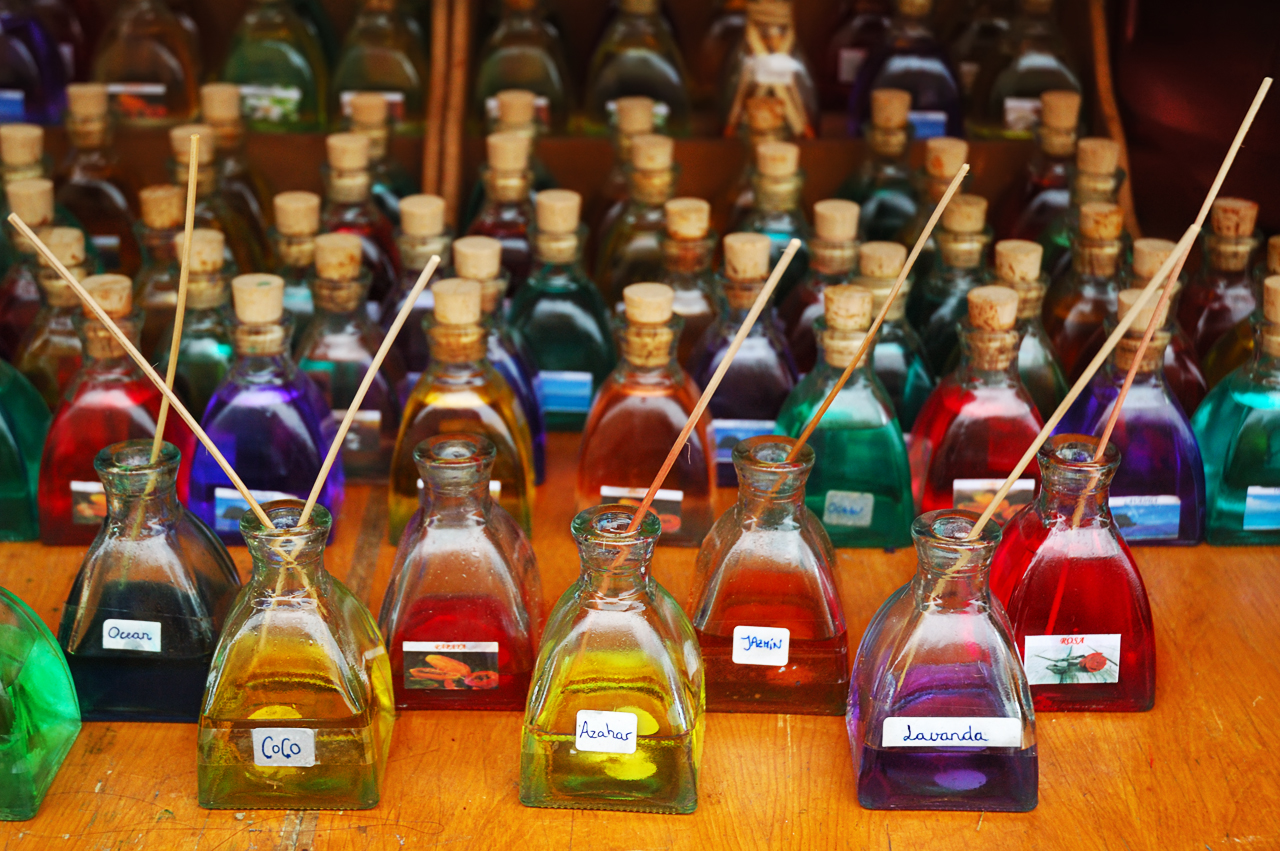
Ambient Essential Oil

Ambient Essence Oil

Ambient essential oils used in aromatherapy for uplifting the spirit and the mind vary in scents and colors, extracted as they are from different parts of a plant be it leaf, seed, wood, root, flower or resin among others. They have been part of alternative medicine and folk wisdom since time immemorial. That is why, it is not rare to find scented oil stands in medieval fairs around Catalonia, like this one in Vic, Osona (Barcelona Province).

December 10, 2010

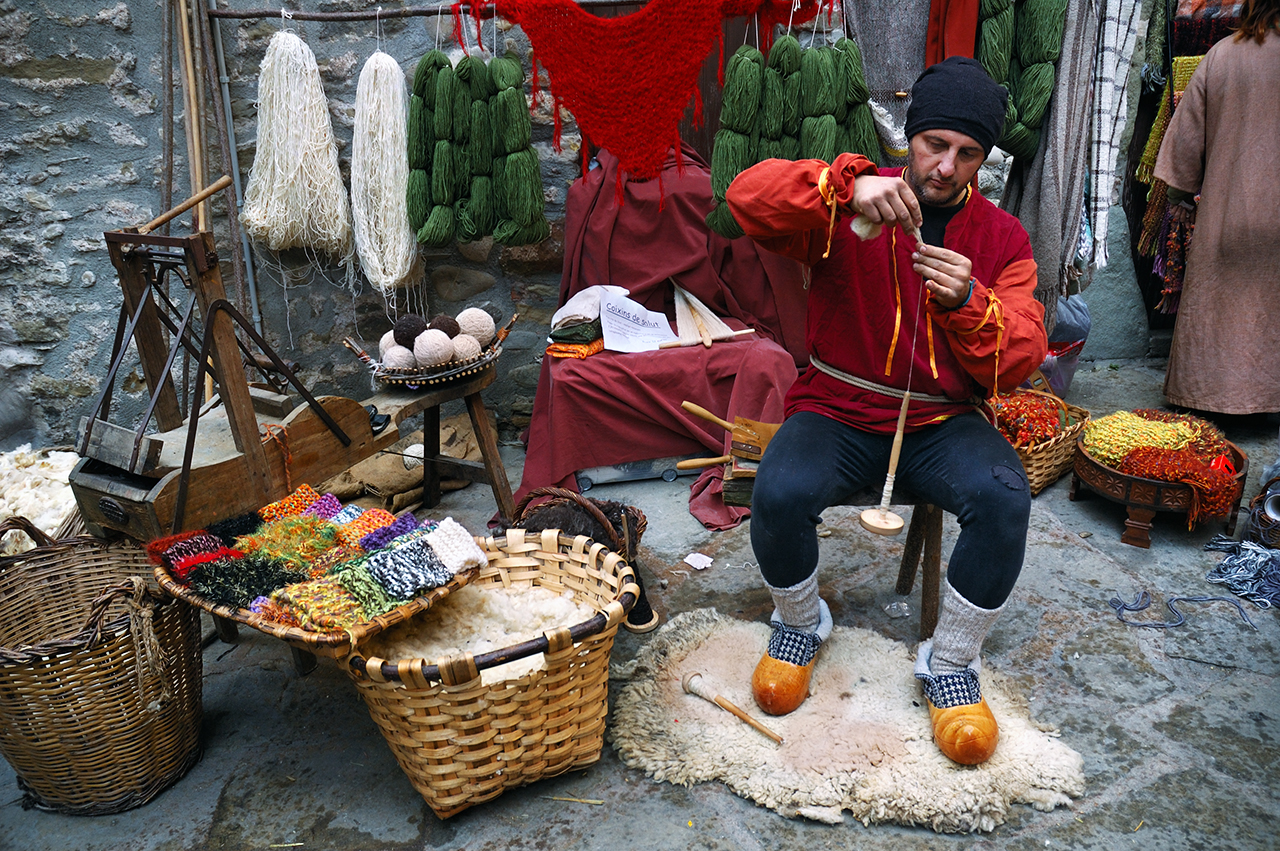
Medieval Crafts: Spinning Yarn on a Drop Spindle

Spinning Yarn on a Drop Spindle Medieval Fair, Vic, Catalonia, Spain

Watching spinners and weavers at their craft in medieval times must have been quite amusing I guess. Having the opportunity to enjoy such an old trade nowadays, performed with very similar skills handed down from one generation to the other, in the same scenario, is priceless. As I promised, here is picture taken in Vic during the Medieval Fair celebrated last week. It is not the first time Barcelona Photoblog features medieval crafts so I recommend you check the archives. Maybe you want to learn something today, well, here's a How-to Spin Yarn on a Drop Spindle video. In case you are quite interested, check Technology in the Medieval Age

May 24, 2010

Egg Stand, Travessera de Gràcia Market, Barcelona

Egg Stand, Travessera de Gràcia Market, Barcelona

An egg stand at Mercat de L'Abaceria aka Travessera de Gràcia market in Barcelona. There was a very similar post about another egg stall in La Boqueria. I think both are quite attractive and you really feel like buying dozens of eggs thanks to their imagination and good taste.

April 25, 2010

Old Lady at Mercat de l'Abaceria Central de Gràcia

Old Lady at Mercat de l'Abaceria Central de Gràcia

Patiently waiting for her turn this sweet old lady seemed to have stopped time in Mercat de l’Abaceria Central at Travessera de Gràcia, 186 one of the almost 45 markets there are in Barcelona city. The image of elderly people carrying a shopping trolley bag is quite familiar over here as it is relatively easy to buy food just across the street and important markets are just a few bus or subway stops away. Gracia quarter is one of those neighborhoods with a little bit of everything, shops, bars, terraces, architecture, art galleries, pedestrian-friendly streets, trees, beautiful squares and a bohemian atmosphere. Curiously this quarter I haven't covered much in Barcelona Photoblog in the past. I hope I change that soon.

November 03, 2009

Opuntia ficus indica: Cactus Figs - Higos Chumbos

Opuntia ficus indica: Cactus Figs - Higos Chumbos [enlarge]


Here are some Cactus Figs, Indian Figs, Tunas or as we know them in Spanish, Higos Chumbos. A lot of names to designate a delicious fruit that oddly enough comes out of Opuntia ficus-indica, a cactus. This is one good example of specialization, of survival in extreme conditions, one of those wonders of mother nature.

Would you expect to get food out a cactus!? I mean, imagine you are a primitive man, you are starving and you get lost in the Sonoran desert. You know that you should not try any odd beautiful fruit or plant cause previous experience tells you that it could be dangerous. You probably get to smell it, lick it but finally the spines make you change your mind. I have always wondered who was the first to try so and so, say, eating an octopus or a snail or a swallow's nest or a shark's fin!? They say cattle have a knack for this plant once farmers burn it to get rid of the sharp points.

I suppose no one got rid of the spines for us in the past, or was it a lightning perhaps, maybe a suicidal cow who dared to chew on it or why not, the blasting jet of a mysterious alien mothership? I have read that in Mexico you do not only eat the fruit but also the young pads called nopales before they grow the spines of course and have them with eggs and jalapeños for example.

In southern Spain higos chumbos grow in the wild as they have this incredible ability to multiply out of any small fragment but there are also extensive crops. Take for example the case of Murcia where almost 200 tons of tunas are harvested every year. The plant has some medicinal properties too as it contains a mucilaginous substance good to treat nausea, headaches, fever, arthritis, constipation, asthma, burns, stomach-ache and a long etc, it even served as a remedy to fight scurvy during long sea journeys. Besides, there are lots of recipes for both sweet and savory dishes.

I just wanted to show you how they looked at La Boqueria market and to let you know that it is quite common to find them when you travel around Spain. Care for a bite?


April 26, 2009

Fish Eyes

Red Fish at La Boqueria Market[enlarge]

Sorry if you came looking for the lenses. This is only a very quiet scene with some dead actors staring at the audience with very fishy looking eyes. Stop staring at me! Well, you can try moving from left to right and viceversa. See how they follow? Should anyone know the name of the species please help me on this. For the moment they are just some red fish at La Boqueria market, those small ones we normally use to make paella known here as peix de roca (fish living in the bottom rocks), in other words, with benthonic habits. They look like some sort of squirrelfish or Candil to me although those are tropical. Hmm, maybe.

March 18, 2009

Bread and Coques, Help Yourself!

Bread and Coques [enlarge]

We are only three days away from the official arrival of spring on the northern hemisphere, March equinox, and I say official because at least in Barcelona we are having a wonderful fair weather since last week. Buds are sprouting from tree branches, people are talking outloud on bar terraces again or getting a tan on the beach. Over the weekend, thousands flee from the city and set to discover towns nearby in many different ways. Some are veteran excursionists and therefore insist on places they consider a favorite or consult with other experienced fellow travelers about secret troves. But the majority of mortals like me are used to dealing with randomness, trial and error methods and surprises whether they are good or bad. Sometimes we organize a trip to a historical site and then try local restaurants completely blindfolded (big mistake here!). Most of the times though, we first decide on what to eat and where and then if possible include the historical place, the celebration or the local market as an extra. In other words, we travel with the stomach. Local food markets are a fantastic wild card. You can kill two birds with a single shot. Say you blew it and couldn't find a comfortable restaurant where they made a good paella or tapas like some tasty chistorras from Navarre and Spanish omelette, for example, no problem. You run to the nearest stall and jump on the kind person behind the counter like Attila the Hun after crossing the Mongolian prairies, taking a good bite at all the sample food they offer for free, drinking from the wine porron on the house and then maybe, just maybe you buy a thing or two at the most. The cherry on top would be that you could bargain but they are not stupid either. Please visit local markets and try local food like these Catalan coques covered with all sorts of ingredients. Notice in the image you also have bread and empanadas (pie).

October 24, 2008

Stones And Gems, Shapes, Light And Energy

Stones And Gems

Quartz or methacrylate , energy generating or not, you have to admit that faceted geometric objects when exposed to light do transmit a certain feeling of relaxation and can trigger a hypnotic state. You may remember your childhood for example, when you spent hours looking to the reflections of a prism under the sun. Is that the origin of greed? Is that what makes people go crazy about buying jewels?. I mean, gems are just mineral. Diamonds come from carbon, what makes it so precious? Everything lies in that fascination for stones, light and maybe some hidden energy that hooks us into collecting color crystals. The magic of mother Earth...This image was captured at a stall in a local market of a town called Monistrol.

October 19, 2008

Evil Mask, Monistrol de Montserrat

Devil Mask, Monistrol de Montserrat [enlarge]

You know the devil disguises or manifests in oh so many ways. One day he may be McCain Trump himself, some other day the hideous child of our neighbors, maybe a cat, a pumpkin or simply an evil mask with firecrackers inside, as is the case of this one at Monistrol de Montserrat.

It was on one of the stalls of the market organized during the Fira de la Coca i el Mató 2008 (a local food fair).

Remember this fair at Monistrol has been featured here in the past, as for example in: Say Cheese.

I would like to go around with this for Halloween. In fact there was an old B movie where the devil himself wandered among the crowd for the famous celebration and everybody mocked at his attire, with tragic consequences, of course.

Follow label Monistrol below for more.

September 02, 2008

Herrings, Boqueria Market, Barcelona

Herrings at Boqueria market stall in Las Ramblas, Barcelona [enlarge]

There are several markets in Barcelona but La Boqueria or Mercat de Sant Josep in Las Ramblas is one of the most renown for historical reasons and why not, due to its location. The place gathers locals and tourists alike and making your way through the narrow corridors is an adventure. Not that you can find whatever you want here but there's the usual belief that if they don't have it you won't find it elsewhere. Besides the fruit stalls which are a must-see, the seafood section is also worth visiting. Today I show you a detail of some herrings which caught my attention. I think they are smoked, but I can't tell a smoked herring from a salted one. In fact I can't tell a sardine from a herring and definitely herring is not part of our daily diet. I suppose many of you do eat herring frequently so why not checking this suggestive site with plenty of herring recipes

June 15, 2008

Wooden Donkey at Torrelles de Llobregat Market near Barcelona

Wooden Donkey at Torrelles de Llobregat Market near Barcelona

Talking about curious products in a market here's this wooden donkey I photographed in Torrelles de Llobregat, a small town near Barcelona city, the other day.

June 14, 2008

Pickled Green Tomatoes in Barcelona

 [enlarge]

These pickled green tomatoes caught my attention at a street market. The bowl I found among other kinds of pickle products like olives or onions. It is not very common here to see green tomatoes prepared that way, at least not for us in Barcelona city. I was standing there preadjusting my camera settings and I had the opportunity to listen to some customers talking to the man in the stall. "Are these olives?" - they asked with surprise. "No, those are green tomatoes from Valencia" - said the stall man. It's a rather ridiculous story but I found the comparison between olives and green tomatoes rather ackward. Here is a green tomato pickle recipe.

June 07, 2008

Cherry Festival (Festa de la Cirera), Torrelles de Llobregat, Barcelona

Cherry Festival (Festa de la Cirera), Torrelles de Llobregat, Barcelona [enlarge]

With these cherries I would like to introduce you to the Festa de la Cirera (cherry festival and market) celebrated in Torrella de Llobregat this weekend. This small town from Xth c. is only some kilometers away from Barcelona city. In fact Torrelles is a municipality in the Baix Llobregat comarque on the right bank of Llobregat river (one of the two rivers surrounding Barcelona). I have some more pictures which I'll show you in coming posts. Check Torrelles de Llobregat on Google maps.

The annual cherry festival at Torrelles de Llobregat holds deep historical significance in the Catalan region. Dating back centuries, the tradition was born out of the area's fertile soil and ideal climate for cultivating cherries. Catalan cherry orchards have long been renowned for their exceptional quality and distinctive taste.

Over time, the festival has evolved into a cherished cultural event, serving as a platform to honor the centuries-old cherry-growing heritage. It has become a symbol of community pride, where locals come together to celebrate their agricultural traditions and pay homage to the land that sustains them.

The festival's roots can be traced to the age-old practice of organizing fairs to showcase the region's bountiful harvest. Torrelles de Llobregat, with its picturesque countryside dotted with cherry trees, became the perfect setting to host this annual gathering.

Through the centuries, the festival has witnessed the evolution of cherry cultivation techniques, the introduction of new varieties, and the advancement of cherry-related industries. Today, it stands as a testament to the resilience and passion of Catalan cherry growers who have preserved this cultural heritage through generations.

The annual cherry festival not only offers a delightful gastronomic experience but also serves as a living history book, reminding us of the traditions, skills, and dedication that have shaped Catalonia's renowned cherry industry.

November 16, 2006

Turmeric: A Spice Rooted in Catalan Medieval History

Large metal bowl heaped with finely ground yellow turmeric powder on display at a medieval fair spice stall in Súria, with warm light emphasizing the rich color and texture of the spice.

Resuming our Medieval Fair in Súria, we reach the spices stall, where I couldn't refrain from firing a bunch of shots on this big bowl of turmeric, a spice obtained from the dried and powdered rhizome of Curcuma longa, an Indian plant. It is an ingredient in curries, and in the Middle Ages its color made it a cheaper substitute for saffron. It originated 4000 years ago and is linked to Vedic culture in India, where it was used as a culinary spice and had religious significance. The name derives from the Latin terra merita (“meritorious earth”) due to the resemblance to the color of some minerals. It can be used as a dye for cloth or added to chicken broth or dairy products such as margarine. Curcumin, the active ingredient in turmeric, is considered to have medicinal properties as an antibiotic and anti-inflammatory. Although I am not particularly fond of yellow, I have to admit that Curcuma makes a wonderful subject for a colorful picture.
Web Analytics