Showing posts with label medieval trades. Show all posts

December 10, 2010

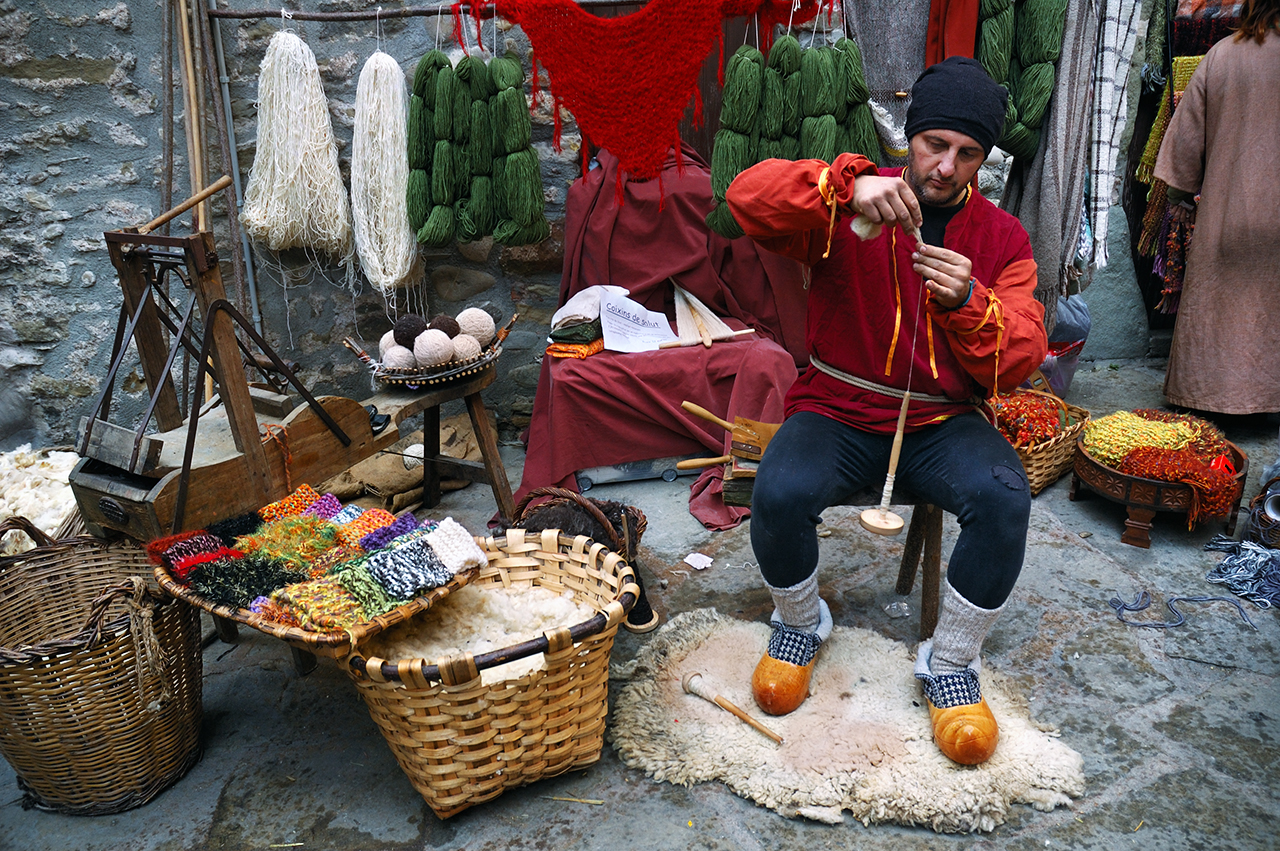
Medieval Crafts: Spinning Yarn on a Drop Spindle

Spinning Yarn on a Drop Spindle Medieval Fair, Vic, Catalonia, Spain

Watching spinners and weavers at their craft in medieval times must have been quite amusing I guess. Having the opportunity to enjoy such an old trade nowadays, performed with very similar skills handed down from one generation to the other, in the same scenario, is priceless. As I promised, here is picture taken in Vic during the Medieval Fair celebrated last week. It is not the first time Barcelona Photoblog features medieval crafts so I recommend you check the archives. Maybe you want to learn something today, well, here's a How-to Spin Yarn on a Drop Spindle video. In case you are quite interested, check Technology in the Medieval Age
April 13, 2007

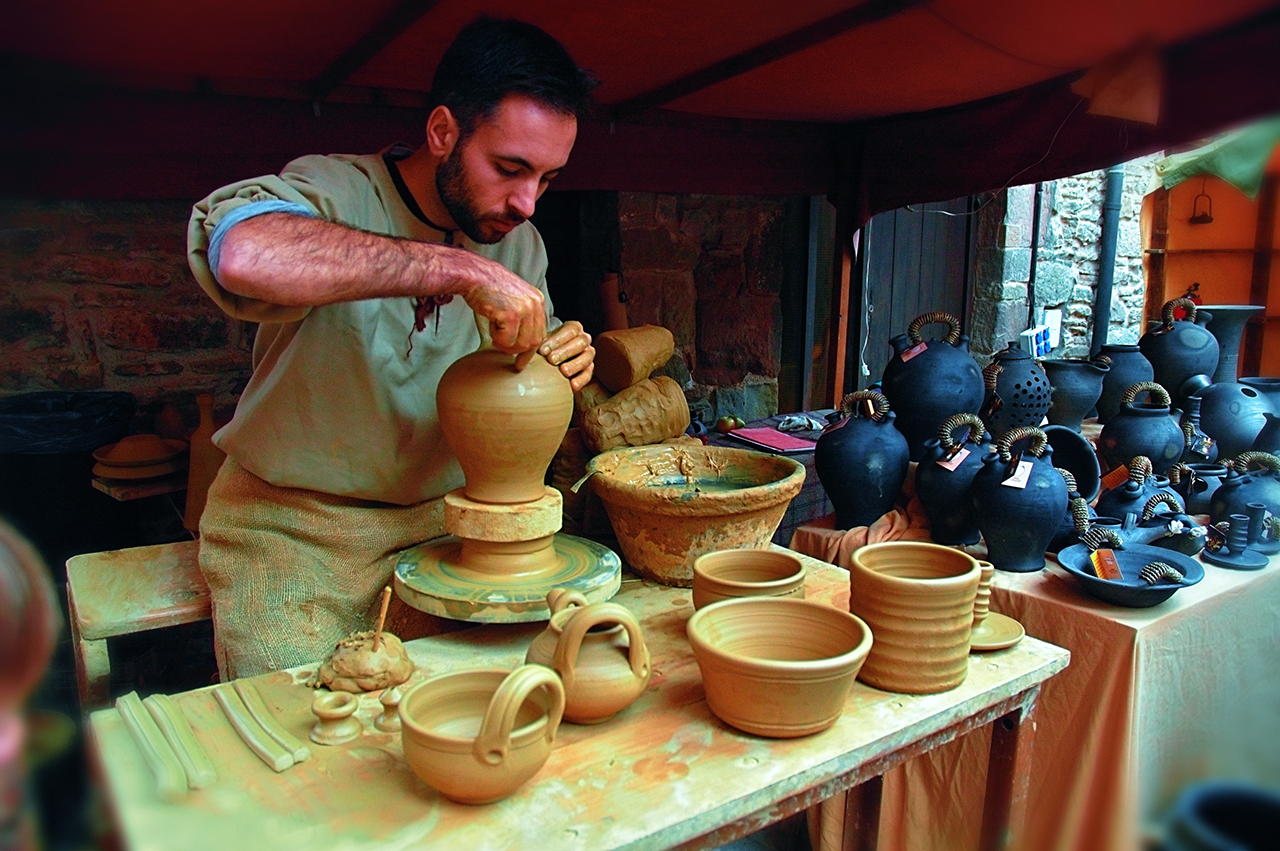
Potter Magic in the Medieval Era: Suria Market

Potter Magic in the Medieval Era: Suria Market


This potter seemed to have a magic wand, everything he touched suddenly acquired weird forms that little by little and against all odds finally became the most unsuspected object. But Mr. Potter here was no magician, he was a modest craftsman disguised in medieval clothes impersonating a medieval potter, one of the many trades so typical in Medieval markets in the outskirts of towns, like the fortress town of Suria to be more precise. If you want to see a stonecutter photographed the same day follow the link. There were more pictures about Suria which you can find searching in Blogger toolbar on top of the page or in my Technorati searchlet. The intense colors are created using Color Lab effect in PhotoKit Color 2.0 - Photoshop Plugin by Pixel Genius.

November 16, 2006

Turmeric: A Spice Rooted in Catalan Medieval History

Large metal bowl heaped with finely ground yellow turmeric powder on display at a medieval fair spice stall in Súria, with warm light emphasizing the rich color and texture of the spice.

Resuming our Medieval Fair in Súria, we reach the spices stall, where I couldn't refrain from firing a bunch of shots on this big bowl of turmeric, a spice obtained from the dried and powdered rhizome of Curcuma longa, an Indian plant. It is an ingredient in curries, and in the Middle Ages its color made it a cheaper substitute for saffron. It originated 4000 years ago and is linked to Vedic culture in India, where it was used as a culinary spice and had religious significance. The name derives from the Latin terra merita (“meritorious earth”) due to the resemblance to the color of some minerals. It can be used as a dye for cloth or added to chicken broth or dairy products such as margarine. Curcumin, the active ingredient in turmeric, is considered to have medicinal properties as an antibiotic and anti-inflammatory. Although I am not particularly fond of yellow, I have to admit that Curcuma makes a wonderful subject for a colorful picture.
Web Analytics