Showing posts with label gargoyles. Show all posts

October 09, 2008

Gargoyle at Plaza del Rey, Barcelona

Gargoyle at Plaza del Rey, Barcelona [enlarge]

In the previous post we talked about witches and mystic places so why not keeping the same mood to contemplate in awe this devilish gargoyle at Plaza del Rey. A horrible creature twitching every muscle, stretching to howl in a sinister gesture. I try to imagine the creepy sound while a shiver comes down my spine. Fortunately there is only silence, a trail of water perhaps coming out of the snout. You know what, this twisted cry reminds me of the Scream by Munch. You don't hear it but it gives you the creeps.

I would like to suggest today some Photoshop Killer Tips by Matt Kloskowski via Layers Magazine
September 20, 2008

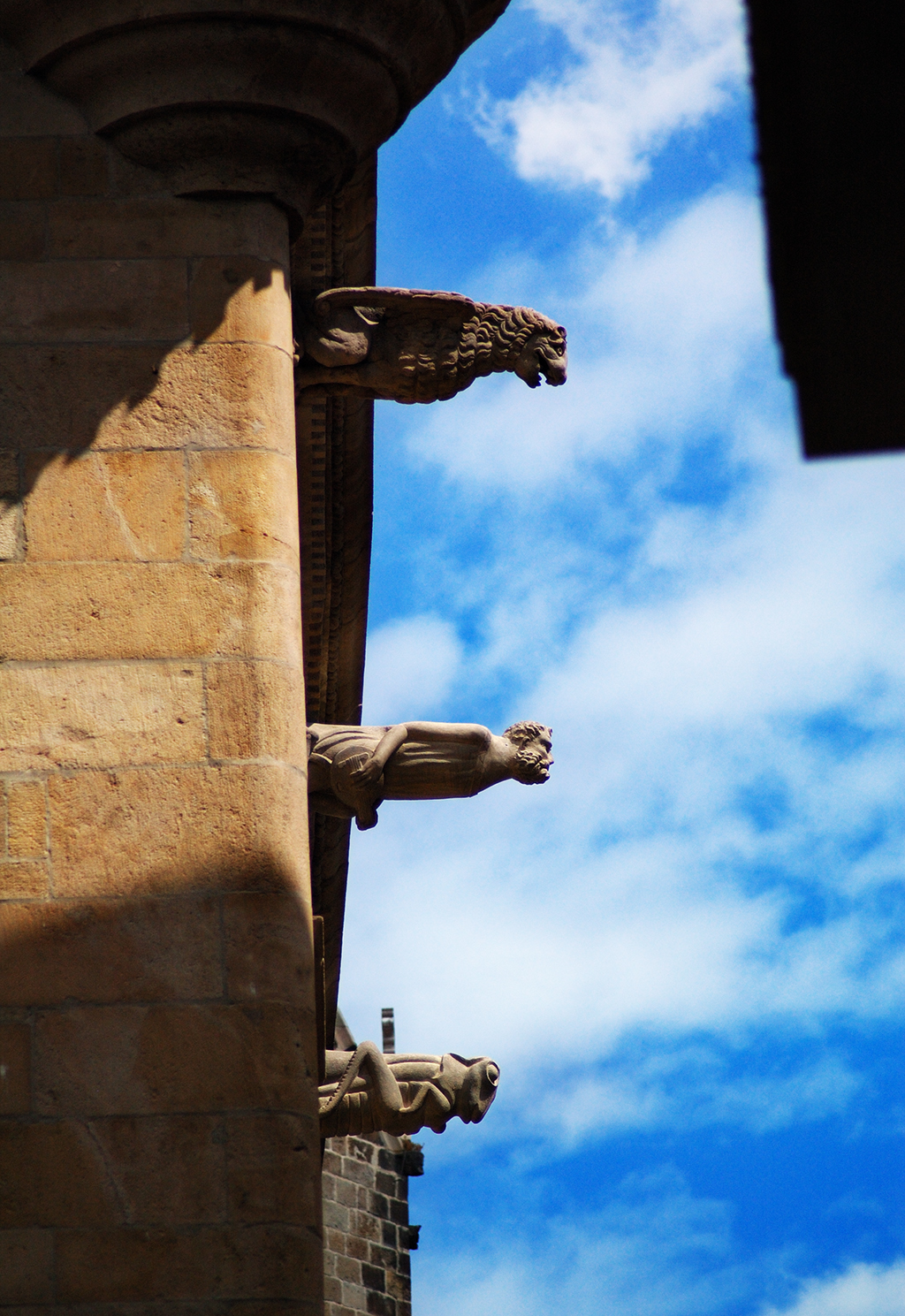
The Gargoyles of Death, Plaza del Rey, Barcelona

The Gargoyles of Death, Plaza del Rey, Barcelona

Half-bred uncanny creatures, stalking from above and ominously spitting rivers of water as if announcing the downfall of man and the arrival of an ignote, unfathomed gloomy world. 

Sunday morning on your way to church. A long, long time ago. You have a sudden urge to pray. Things are not going too well lately. Mysterious deaths scamper through the city. Hundreds, perhaps thousands of people are doomed by now and nobody knows why. Is it God's wrath? Is it one of the seven plagues? 

Some say it comes in the air or that it dwells in the pestilent waters of the outskirts. Almighty God! What is that! A filthy rat!. Get out of my way, you abominable evil creature. I wonder why there are so many. Stop looking at me, you hideous gargoyles...

In 1589 1/4 of the population in Barcelona, 12.000 to 13.000 approximately, succumbed to bubonic plague. Here is Plaça del Rei, the place where the gargoyles are.

April 14, 2006

Hospital de Sant Pau: Gargoyles

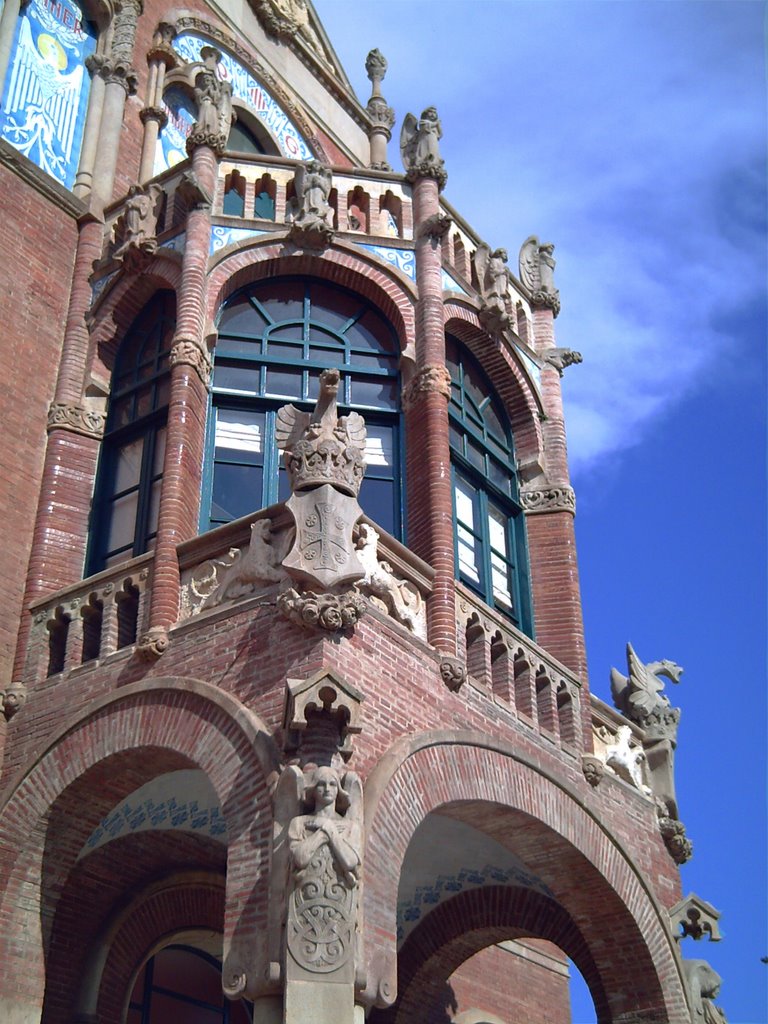
Close-up of the ornate facade of the Administration Pavilion at the Hospital de Sant Pau, Barcelona. The image features red brickwork contrasted with intricate stone carvings, including a central heraldic shield flanked by lions and topped with a crown. Above the shield is a stone eagle finial. Ornate stone angels and sculptural pinnacles frame the Gothic-style arched windows, with colorful blue and yellow ceramic mosaics visible in the architectural details.

Hospital de Sant Pau, a magnificent representative of modernism in Barcelona was projected by the architect Lluís Domènech i Montaner in the year 1901. Construction finished in 1930. Of course this is a place you cannot miss if you are an art lover and it is just one subway stop away from Sagrada Familia.

Eusebi Arnau and Pau Gargallo were the principal sculptors of the stone figures decorating the pavilions, where one can admire exquisite gargoyles, winged mythological figures, archangels, and lions. These pavilions have been meticulously restored and form part of a modernista complex now open to the public. All clinical services were relocated to the contemporary Sant Pau Hospital situated immediately behind the historic site.

Updated: 2026


Heraldry and Institutional Identity

The Central Escutcheon

The focal point of the facade is the coat of arms of the Hospital de la Santa Creu, featuring:

  • The Cross: The cross pattée, the historic emblem of the original 15th-century foundation.
  • The Supporters: Two lions rampant that act as protectors, signifying the institution's noble status.
  • The Crown: A count's crown, acknowledging Barcelona's history and the hospital's royal ties.

The Aquiline Finial

At the heraldic peak sits an eagle with outspread wings, frequently referencing Saint John the Evangelist, symbolizing the union of healing and divine wisdom.


Sculptural Iconography: The Celestial Guard

The Angelic Hierarchy

The complex is "guarded" by angelic sentinels that provide a protective spiritual layer, designed to aid the psychological recovery of the sick through beauty and faith.

  • Guardian Angels: Positioned on gables to act as architectural sentinels.
  • The Virtues: A program including Faith, Hope, Charity, and Obra (Action).

Materials and Artistic Collaboration

The interplay between exposed red brick and Montjuïc stone demonstrates the seamless collaboration between Domènech i Montaner and his artisans. The addition of polychrome ceramics adds the final layer of trencadís that defines the Catalan Art Nouveau aesthetic.

Web Analytics