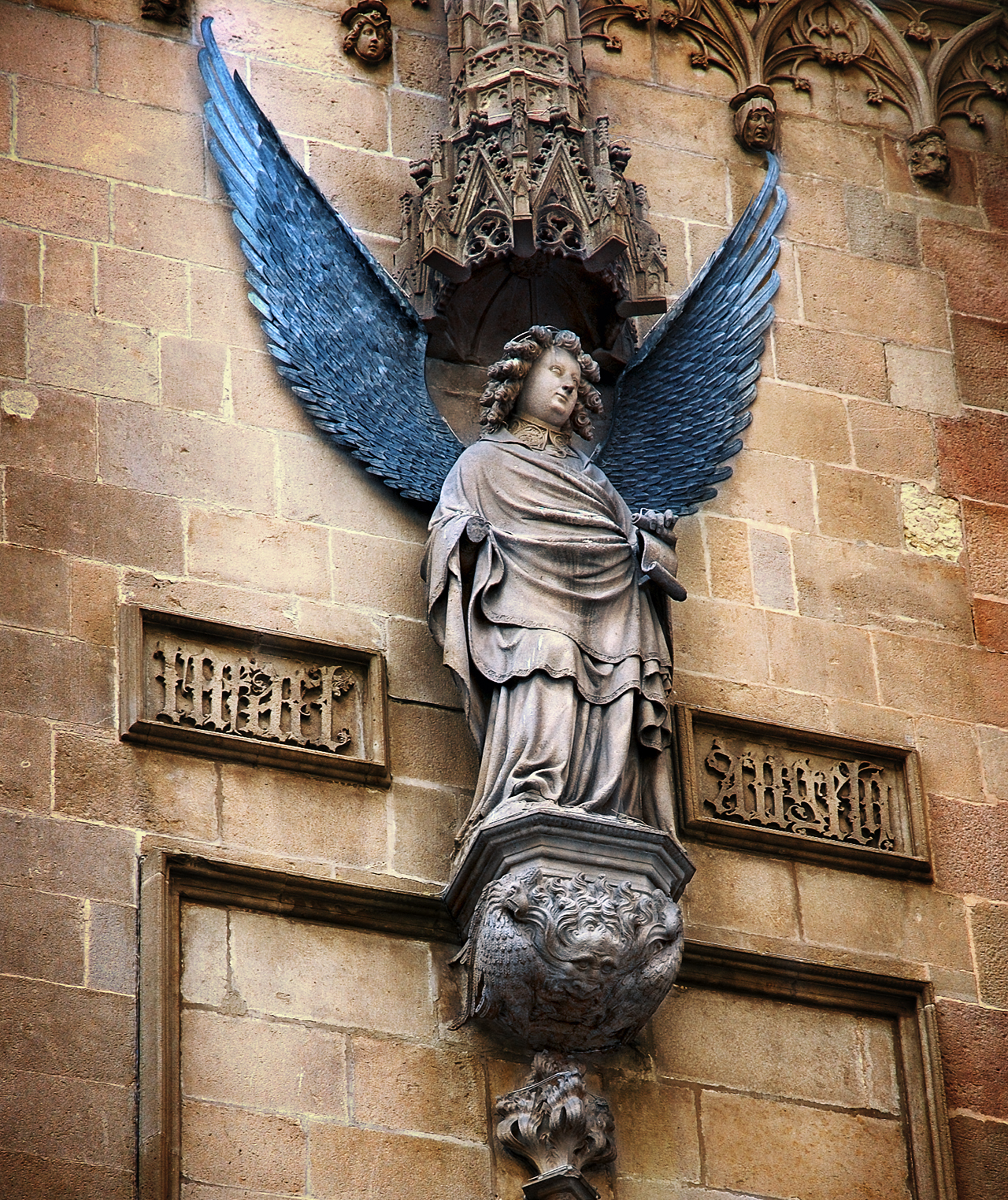
Walking down Portal del Angel street you get to the intersection with Carrer dels Arcs. There is a small building over there called Palacio Pignatelli which holds the Reial Circle Artistic (Royal Artistic Circle). This entity was founded in 1881 although its royal category was granted by Alfonso XIII in 1926. The aim of this non-profit organization is to gather all those persons interested in Fine Arts and support them in their creative experience. The place has held many important exhibitions in Barcelona. But I only wanted to show you a detail of the beautiful figure on its facade.
Barcelona photos: Daily photographs of Barcelona, Spain. Pictures of a modern city with travel tips in a personal photoblog. A photography and travel site. Art, architecture, people and traditions. Travel to Barcelona through my camera, know more about our city and towns nearby. Welcome!
Wanna be featured?
August 10, 2008
Reial Circle Artistic in Pignatelli Palace, Carrer dels Arcs 5, Portal del Angel, Barcelona
Walking down Portal del Angel street you get to the intersection with Carrer dels Arcs. There is a small building over there called Palacio Pignatelli which holds the Reial Circle Artistic (Royal Artistic Circle). This entity was founded in 1881 although its royal category was granted by Alfonso XIII in 1926. The aim of this non-profit organization is to gather all those persons interested in Fine Arts and support them in their creative experience. The place has held many important exhibitions in Barcelona. But I only wanted to show you a detail of the beautiful figure on its facade.
March 13, 2008
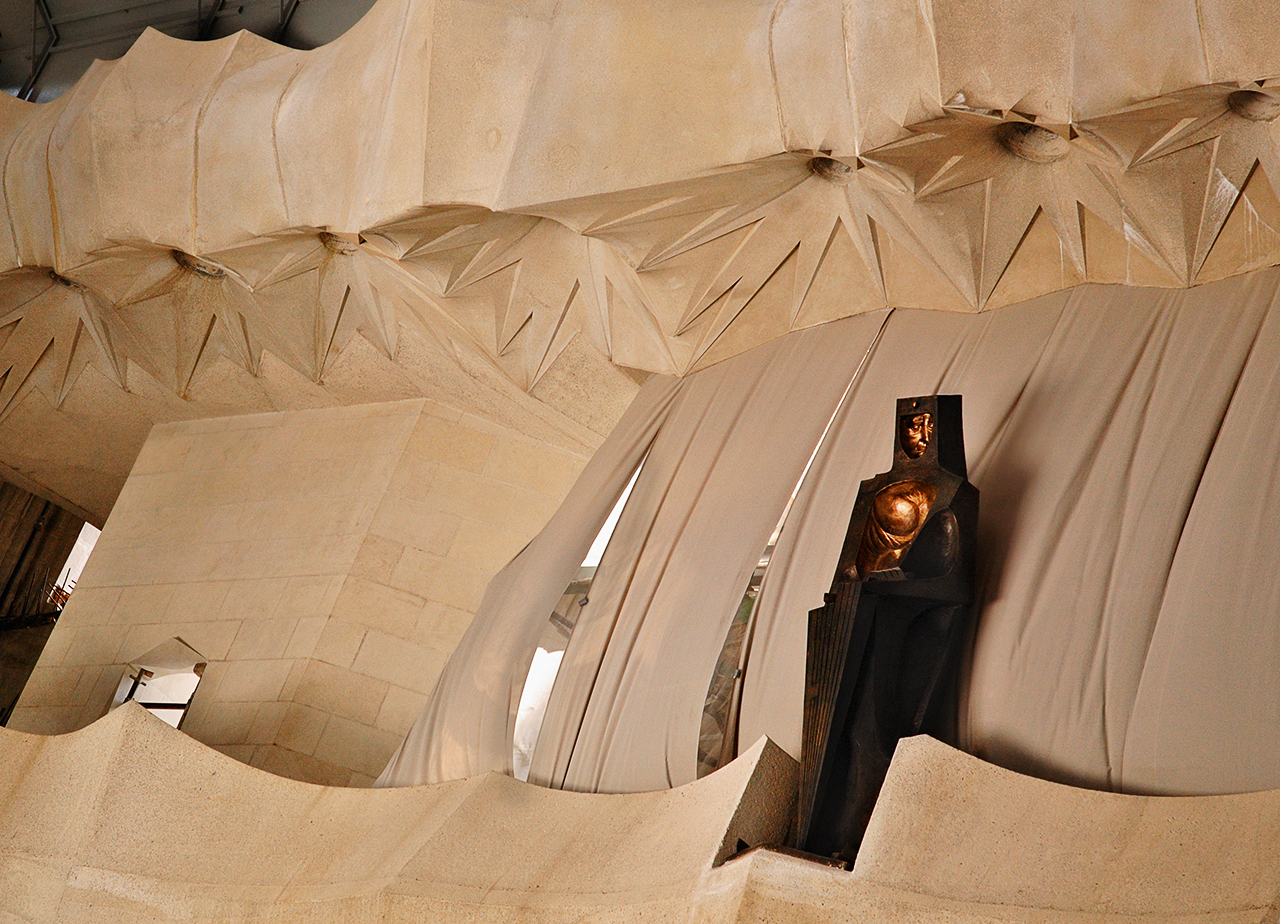
A Gaudian Sculpture Near Sagrada Familia Ceiling

High above the nave of Sagrada Família, Gaudí’s geometry folds into sharp, star‑shaped coffers that frame this striking dark figure. The modernist sculpture stands out against the pale stone and draped fabric, its almost metallic surface catching the warm interior light and pulling the eye away from the vast architecture around it.
As usual it is hard to crop Gaudí’s work, because every edge of the frame cuts through some intentional line, curve, or texture that seems to belong to a larger whole. Here the statue’s rigid, frontal pose contrasts with the soft billowing cloth behind it and the undulating balcony in front, creating a quiet, almost theatrical corner inside the basilica.
Unlike the pale stone sculptures outside, this figure is nearly black, with a compact, iconic silhouette that immediately evokes religious imagery. The golden chest area and stylized drapery suggest a protective, maternal presence, so it is tempting to read it as a distant, modern echo of the Black Virgin of Montserrat, La Moreneta, patroness of Catalonia—though this remains only a personal interpretation, not an official attribution.
Check other posts about Sagrada Familia and Gaudi

