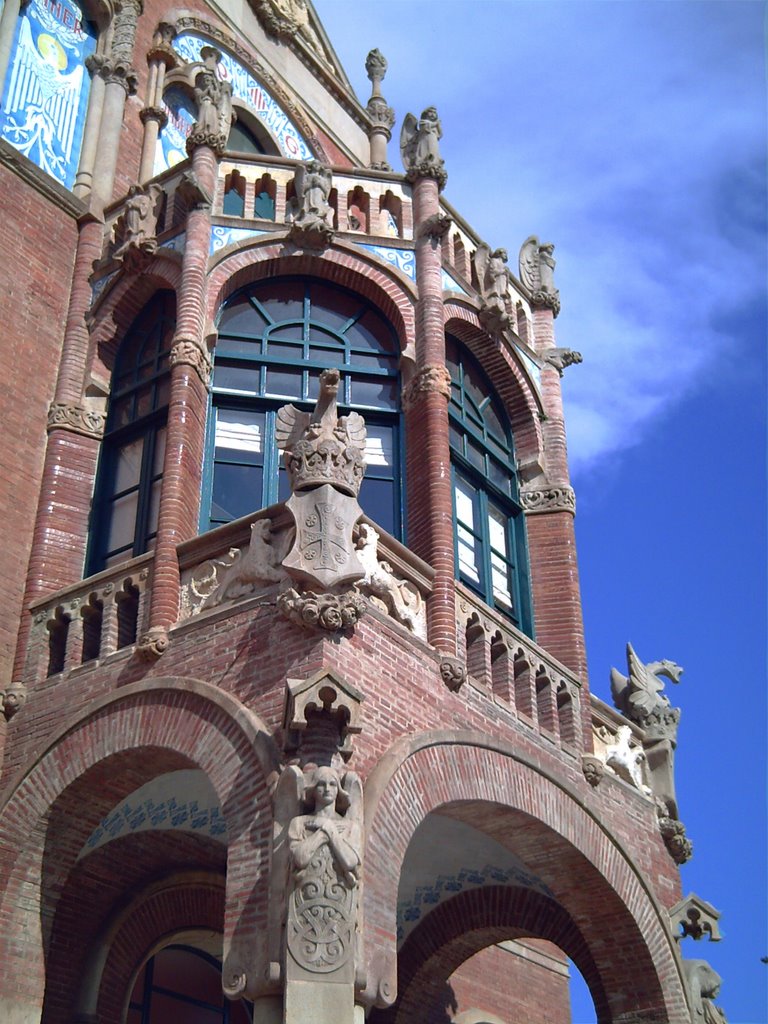
Eusebi Arnau and Pau Gargallo were the principal sculptors of the stone figures decorating the pavilions, where one can admire exquisite gargoyles, winged mythological figures, archangels, and lions. These pavilions have been meticulously restored and form part of a modernista complex now open to the public. All clinical services were relocated to the contemporary Sant Pau Hospital situated immediately behind the historic site.
Updated: 2026
Heraldry and Institutional Identity
The Central Escutcheon
The focal point of the facade is the coat of arms of the Hospital de la Santa Creu, featuring:
- The Cross: The cross pattée, the historic emblem of the original 15th-century foundation.
- The Supporters: Two lions rampant that act as protectors, signifying the institution's noble status.
- The Crown: A count's crown, acknowledging Barcelona's history and the hospital's royal ties.
The Aquiline Finial
At the heraldic peak sits an eagle with outspread wings, frequently referencing Saint John the Evangelist, symbolizing the union of healing and divine wisdom.
Sculptural Iconography: The Celestial Guard
The Angelic Hierarchy
The complex is "guarded" by angelic sentinels that provide a protective spiritual layer, designed to aid the psychological recovery of the sick through beauty and faith.
- Guardian Angels: Positioned on gables to act as architectural sentinels.
- The Virtues: A program including Faith, Hope, Charity, and Obra (Action).
Materials and Artistic Collaboration
The interplay between exposed red brick and Montjuïc stone demonstrates the seamless collaboration between Domènech i Montaner and his artisans. The addition of polychrome ceramics adds the final layer of trencadís that defines the Catalan Art Nouveau aesthetic.

